
Industrial Soya Chunks Manufacturing Machine: Features, Working and Benefits
Explore the features, working process and benefits of a Soya Chunks Manufacturing Machine. Discover how an industrial soya chunks production plant supports efficient manufacturing.
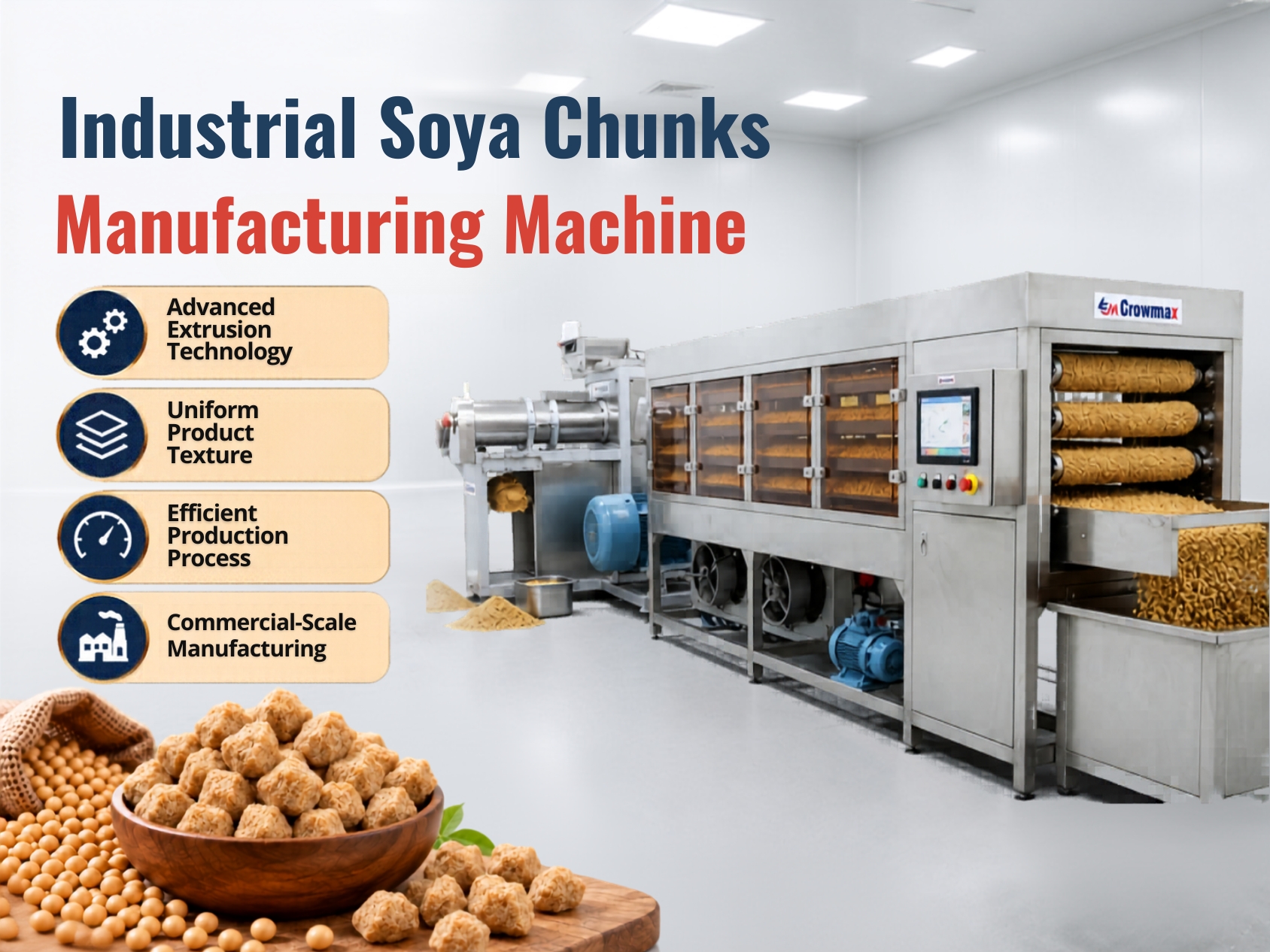
Understanding Industrial Soya Chunks Production: Machinery, Process and Applications
Demand for protein-rich food keeps growing as more people pay attention to what they eat. Soya chunks, also known as soya badi or textured vegetable protein (TVP), have become a favourite because they are high in protein, versatile in the kitchen and easy on the budget.
If you are planning to enter this market or grow an existing food business, an industrial Soya Chunks Manufacturing Machine can give you a steady, scalable way to produce. An industrial setup turns soya-based raw materials into textured, protein-rich products through extrusion, and it helps you keep quality consistent from batch to batch.
In this guide, we walk through what these machines do, how the production process works, where the finished products are used and what to consider before you buy equipment for a commercial facility.
What Is a Soya Chunks Manufacturing Machine?
A Soya Chunks Manufacturing Machine is industrial food-processing equipment that turns soya-based raw materials into textured soya protein. Most machines rely on extrusion, in which the material is mixed, heated and pushed under pressure, then shaped into chunks of different sizes and textures.
Food processing companies, protein food manufacturers and entrepreneurs who want to start a soya chunks business typically use these machines. A commercial Soya Badi Making Machine produces pieces with a uniform shape and texture, even when it is running at full volume.
What Can You Make with It?
Depending on the machine configuration, raw material formulation and production goals, soya processing equipment can produce soya chunks, soya nuggets, textured vegetable protein (TVP), soya granules and other extruded soya protein products. The final product depends on the extrusion system, die design, processing conditions and the raw material mix, so it is worth discussing your target products with the manufacturer before you buy.
How Does an Industrial Soya Chunks Machine Work?
The process follows an extrusion-based method. Raw materials are mixed, conditioned, heated and forced through a specially designed die that gives the product its structure. Here is a general overview of the stages.
1. Raw Material Preparation
The base is usually defatted soya flour or another specified soya protein ingredient, and it must meet your quality and formulation standards.
2. Mixing and Conditioning
The ingredients are blended with a controlled amount of water and any other permitted ingredients, depending on the recipe. A well-mixed feed gives the extruder a consistent starting point, which matters for the final texture.
3. Extrusion
Mechanical pressure and heat transform the conditioned material into a structured protein product. This stage does most of the work in creating the chunk's texture.
4. Shaping and Cutting
After extrusion, the material passes through a die that sets its shape and size, and a cutter trims it to the required length.
5. Drying
The freshly extruded chunks still hold a lot of moisture, so they go through drying to reach the level needed for storage and packaging. A good dryer makes a real difference to shelf stability.
6. Cooling and Packing
Finally, the dried chunks are cooled and packed. Good packaging keeps moisture and contamination out during storage and transport.
What Features Should You Look For?
Choosing the right machine affects both efficiency and product quality. Modern industrial equipment offers a range of useful features, though what you get depends on the design and configuration.
Extrusion Technology
Extrusion technology is the heart of the machine. It turns soya raw materials into textured protein, and controlled processing conditions help you achieve the structure you want.
Consistent Output
A properly configured Soya Chunks Manufacturing Machine keeps size, shape and texture steady from one batch to the next.
Capacity Options
Machines come in a range of sizes for small, medium and large food manufacturers, so choose based on your expected demand and where you want the business to be in a few years.
Interchangeable Dies
Many machines let you change die arrangements, so you can produce chunks in different sizes and shapes to suit your market.
Integrated Setup
An integrated setup helps coordinate the stages of production, which cuts down on manual handling and keeps the workflow smooth.
Durable Construction
Industrial machinery has to stand up to daily production, so the materials and components should suit the processing environment and be easy to maintain.
What Are the Benefits?
Investing in an industrial Growmax Soya Badi Making Machine. can make a real difference to your operation in several ways.
Large-Scale Production
It supports large-scale production, so you can supply distributors, wholesalers, retailers and food brands in meaningful quantities.
Uniform Product Quality
It helps you maintain uniform product characteristics, which matters a lot for customer satisfaction and for meeting your own quality standards.
Higher Efficiency
A well-designed system also improves efficiency by streamlining operations and reducing the need for manual intervention.
Product Range
You can explore different textured soya products, depending on what your machine can do, your raw material formulations and the demand in your market.
Room to Expand
As demand grows, you can expand capacity by choosing suitable machinery and upgrading your setup over time.
Wide Market
Households, restaurants, hotels, catering businesses and food manufacturers all use soya chunks, which gives you plenty of potential customers across the food industry.
What Does a Production Plant Include?
A commercial Soya Chunks Production Plant. usually brings together several machines and supporting systems that work as one line. The exact setup depends on your capacity, raw material needs and the product you want to make. A typical plant includes:
A raw material feeding system to supply the line, a mixer to blend ingredients with water, an extruder that processes the material under controlled heat and pressure, a die and cutting system to shape and cut the product, a dryer to reduce moisture, a cooling system to bring the product down to temperature before packing, and a packaging machine to prepare it for storage and distribution.
Where Are Soya Chunks Used?
Soya chunks show up in plenty of everyday cooking. Home cooks add them to curries, pulao, biryani and snacks. Restaurants, hotels and catering businesses use them in vegetarian meals and protein-rich dishes. Packaged food brands use textured soya protein in ready-to-cook products, and food processing businesses work it into all kinds of formulations.
What Should You Consider Before Buying?
Before you invest, work through a few key questions.
Capacity
Estimate your daily or hourly production needs, and choose a machine that handles today's demand while leaving room to grow.
Raw Material Compatibility
Make sure the machine suits the formulation you plan to use.
Product Specifications
Shapes, sizes, textures and moisture levels should be settled before you finalise the configuration.
Energy Use
Power requirements and running costs shape the economics of the whole operation.
Installation and Maintenance
Find out about installation requirements, spare parts availability and technical support.
Choosing an Experienced Manufacturer
A supplier who understands industrial food processing can help you pick a setup that fits your business, not just a machine off the shelf.
Why Choose Growmax International?
Choosing a machinery partner is one of the most important decisions in building a food manufacturing business. Growmax International provides food-processing and industrial manufacturing solutions for businesses that want efficient, dependable production facilities.
As you compare options, look for equipment that fits your production targets, product specifications and long-term goals. To learn more about the available solutions, explore the Growmax Soya Badi Making Machine.