
Makhana Roaster Machine: Enhancing Efficiency in Commercial Makhana Production
Discover how a makhana roaster machine improves commercial production with efficient roasting, consistent quality, advanced features and higher productivity.
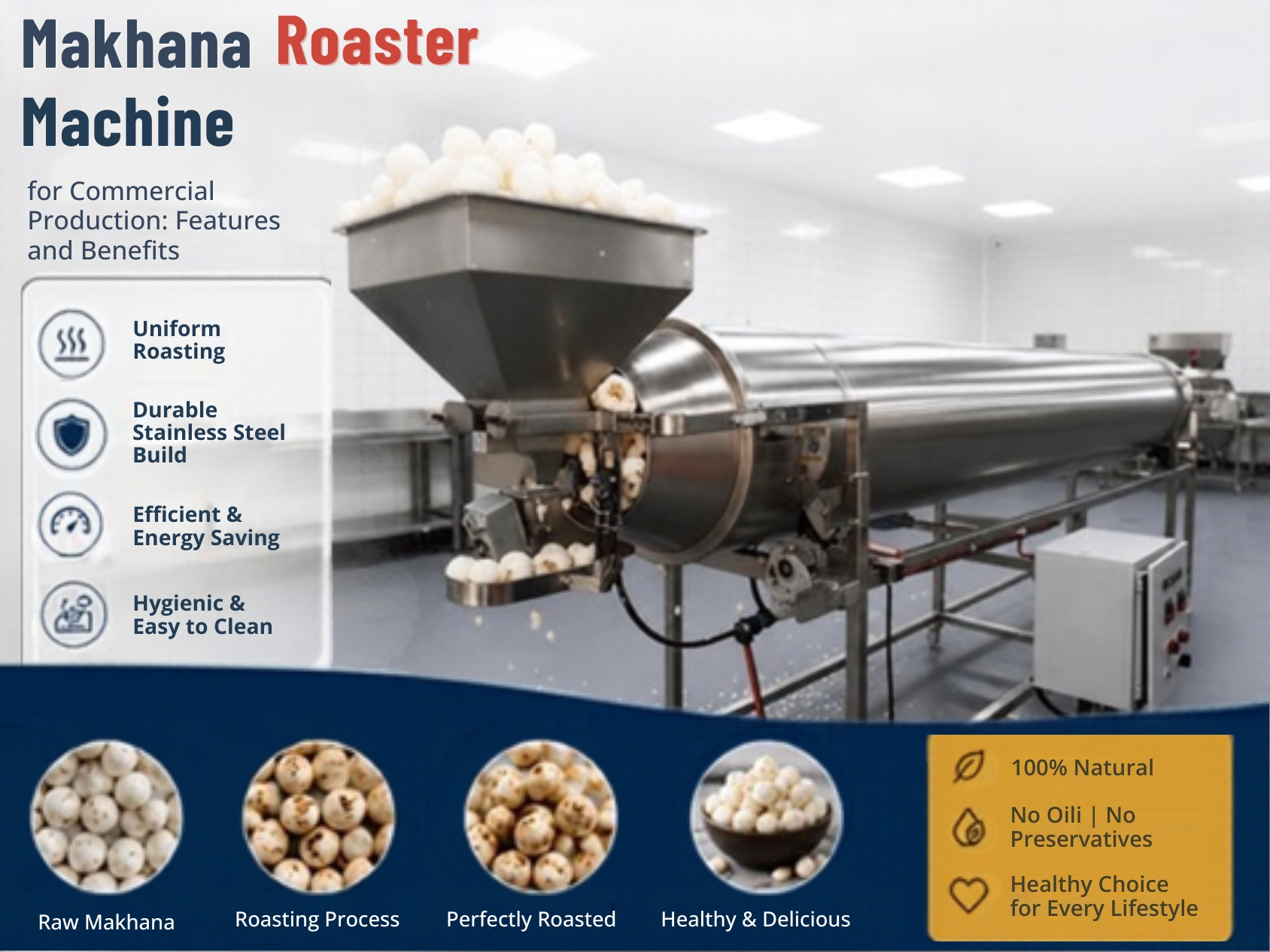
Makhana, also known as fox nuts or lotus seeds, has become a popular snack in domestic and international markets because of its nutritional value and versatility. With increasing demand for roasted and flavoured makhana, food manufacturers are looking for efficient equipment to improve production capacity, maintain product quality and streamline processing operations.
A makhana roaster machine plays an important role in commercial makhana production by providing controlled and uniform roasting. It helps manufacturers achieve consistent texture, better product quality and improved production efficiency compared to traditional manual roasting methods.
For food processing businesses planning to expand their operations, investing in a suitable makhana roasting machine can help simplify roasting operations, reduce manual intervention and support large-scale production requirements.
What Is a Makhana Roaster Machine?
A makhana roaster machine is industrial food processing equipment designed to roast fox nuts evenly under controlled heating conditions. It transforms raw or processed makhana into crispy, ready-to-season snack products that are suitable for flavouring and packaging.
Traditional roasting depends heavily on the operator's experience and judgement. An industrial roasting system offers better control over heat, temperature and processing time. This helps manufacturers maintain consistency from batch to batch and handle larger volumes without compromising the taste, texture and appearance of the final product.
A commercial makhana machine can also be part of a broader food processing setup. Depending on the plant layout and product requirements, roasting equipment can connect with cleaning, seasoning and packaging stages to create a smooth production workflow.
How Does an Industrial Makhana Roasting Machine Work?
The working process of an industrial makhana roasting machine involves controlled heating and roasting, carried out either continuously or in batches depending on the design. While models vary, the process generally follows four stages.
1. Raw Material Feeding
The makhana is cleaned and prepared before it enters the roasting system. Properly prepared raw material leads to more consistent results, and removing dust, dirt and unwanted particles at this stage also protects the quality of the finished product.
2. Controlled Heating
The machine applies controlled heat to reduce moisture and develop the desired crispness. The right temperature and roasting duration depend on the condition of the raw material and the characteristics required in the final product, so operators often fine-tune these settings during initial trials.
3. Uniform Roasting
The roasting mechanism distributes heat across the product. Even exposure is essential, since uneven heat can leave some seeds underdone and others over-browned.
4. Cooling and Further Processing
After roasting, makhana is cooled before moving to the next stage. It may then be transferred for flavouring, seasoning, weighing and packaging. A well-planned makhana processing machine setup connects these operations and keeps the workflow efficient.
Key Features of a Commercial Makhana Roaster Machine
Choosing the right roasting equipment is central to production efficiency and product quality. A modern industrial makhana roaster machine typically offers several important features.
Food-Grade Stainless Steel Construction
Food-grade stainless steel supports hygienic processing and offers durability for regular industrial use. It also makes cleaning and maintenance easier, which is essential for any equipment that touches food.
Temperature Control
Temperature control helps maintain consistent processing conditions and reduces the chances of uneven roasting. Operators who can monitor and adjust heat precisely have better command over the final product.
High Production Efficiency
High production efficiency allows the machine to process larger quantities of raw material with less manual effort, making it practical for manufacturers looking to grow output.
Low Maintenance Requirements
Low maintenance requirements matter over the long term. A well-designed system supports continuous operation with routine care, and accessible components help avoid unnecessary interruptions.
Compact Industrial Design
A compact, industrial design helps businesses use available factory space efficiently. Depending on the model, roasting equipment can fit both small and large facilities.
Automation and PLC-Based Controls
Automation and PLC-based controls simplify machine operation, help operators manage processing parameters and support consistency across shifts.
Major Benefits of Using a Makhana Roasting Machine
Investing in a commercial makhana roasting machine offers clear advantages for food manufacturers, snack producers and entrepreneurs.
Consistent Quality
Uniform heating helps maintain crispness, texture and appearance across batches, which builds customer trust in a snack brand.
Higher Production Capacity
Manual roasting becomes hard to manage as demand grows, while industrial equipment streamlines the process and supports higher volumes.
Reduced Labour Dependency
Automated and semi-automated equipment lowers the need for continuous manual handling, so the workforce can focus on tasks that need skill and attention.
Improved Hygiene and Efficiency
Food-grade construction and organised processing reduce delays and give manufacturers better control over product handling.
Support for Business Growth
As demand increases, the equipment can also support business growth.
Better Retail Appearance
Consistent roasting, followed by grading and polishing, improves the look of packaged makhana on retail shelves.
Applications of an Industrial Makhana Processing Machine
Makhana processing equipment serves several segments of the food manufacturing industry. Its uses depend on the machine configuration and the product being made. Common applications include:
- Roasted makhana production for retail and wholesale markets.
- Flavoured makhana manufacturing with cheese, peri-peri, masala and other seasonings.
- Packaged snack production for branded retail packets.
- Commercial fox nut processing for food processing businesses.
- Export-oriented production for domestic and international buyers.
With a properly planned production setup, manufacturers can handle different product requirements while maintaining consistency and efficiency.
Complete Makhana Manufacturing Process: Machines Required
Commercial makhana production involves several stages. A complete setup may include different machines depending on the raw material condition, the production method and the final product requirements. The major stages are:
Cleaning and Raw Material Preparation
Raw seeds are cleaned to remove dust, dirt and unwanted particles before further processing.
Roasting
The roasting machine applies controlled heat to prepare the seeds for the stages that follow.
Popping and Puffing
The seeds go through the processing needed to develop makhana's characteristic puffed structure.
Shell Removal
Where the process requires it, a shell-removing machine separates the outer hard covering.
Polishing
A polishing machine improves the surface finish and appearance of the product.
Grading and Sorting
A grading machine separates makhana into size categories, helping manufacturers maintain uniformity and serve different market segments.
Seasoning and Packaging
Finished makhana can be flavoured, weighed and sealed for storage, distribution and retail sale.
Integrating suitable equipment at each stage helps manufacturers build a well-organised makhana processing line.
Factors to Consider Before Buying a Commercial Makhana Roaster Machine
Selecting the right machine means evaluating your production needs, infrastructure and long-term business goals. Consider the following factors before making an investment.
Production Capacity
Estimate how much makhana you plan to process per hour or per day. Choose equipment that matches current requirements while leaving room for growth.
Construction and Materials
Check the build quality and the materials that contact food. Food-grade stainless steel is an important consideration for hygienic processing.
Heating and Temperature Control
Understand the heating mechanism and the available controls, since they directly shape roasting results and final product quality.
Automation and Ease of Operation
Decide whether manual, semi-automatic or automatic operation suits your team, and consider how easily operators can learn the controls.
Maintenance and Technical Support
Check maintenance requirements, spare parts availability and after-sales service. Reliable support keeps production running smoothly.
Total Cost of Ownership
Compare the purchase price with running costs, maintenance expenses and expected output. The right machine delivers long-term value, not just a low upfront price.
Why Choose Growmax International for Makhana Processing Equipment?
Choosing a machinery supplier matters as much as choosing the equipment itself. Growmax International provides food processing and snack manufacturing machinery designed to support businesses across different production segments. Key strengths include:
- Food-grade construction for hygienic processing.
- Modern technology, including automation and PLC-based control systems.
- Solutions designed to improve productivity and reduce operational effort.
- Customer support, spare component availability and professional technical assistance.
Whether you are setting up a new food processing unit or expanding an existing facility, the right machinery can help you build an efficient production operation. Explore the Growmax Makhana Making Machine range for more details.