
Pasta Making Plant: A Complete Guide for Food Manufacturers
Explore how a pasta making plant works, the machinery required, the pasta production process, and key factors to consider when setting up a commercial pasta manufacturing unit.
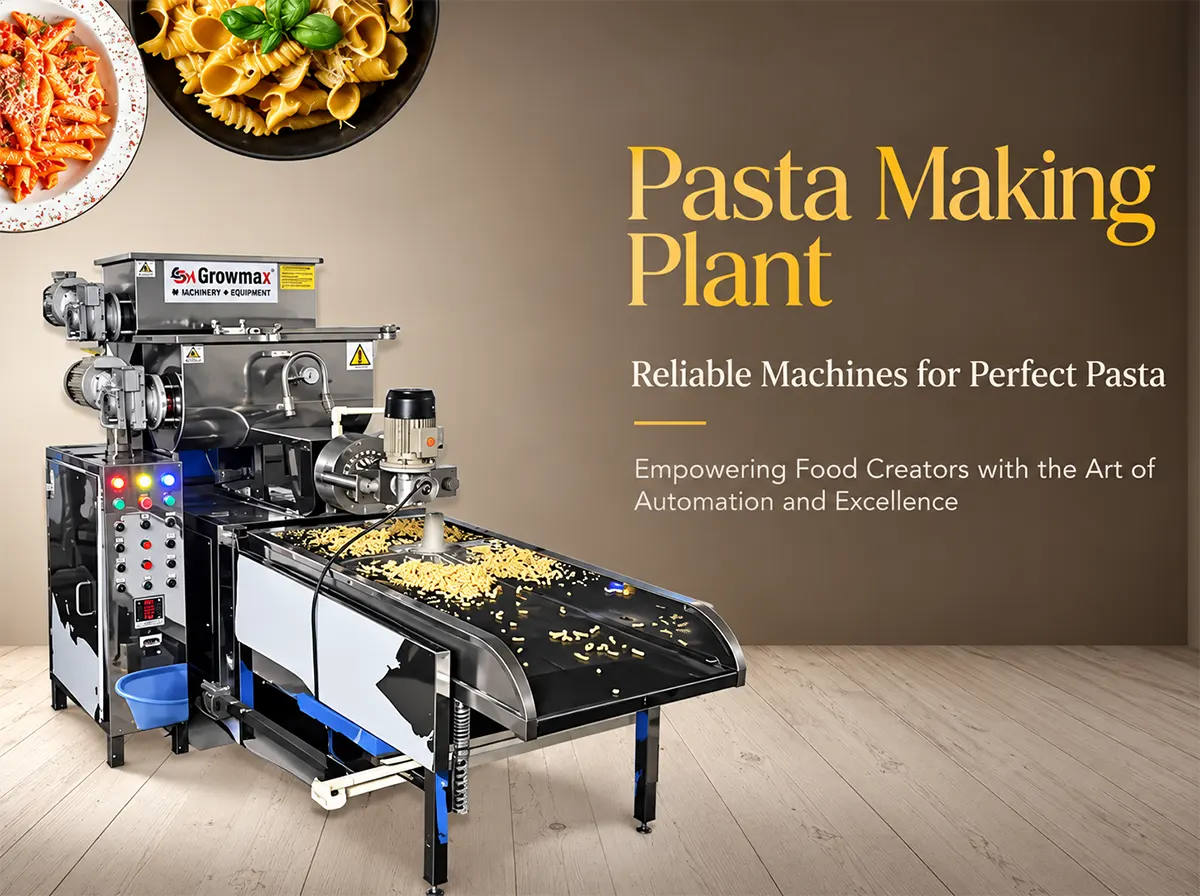
What Is a Pasta Making Plant?
A Pasta Making Plant is a production setup designed to manufacture pasta on a commercial scale. It includes the machinery and supporting equipment required to process raw ingredients into finished pasta products.
Depending on the production requirements, a plant may include dough mixing systems, extrusion or shaping equipment, cutting units, drying systems, and packaging machinery.
A properly planned plant helps manufacturers maintain consistent product quality, manage production efficiently, and meet the requirements of different markets.
What Products Can a Pasta Making Plant Produce?
The type of pasta produced depends on the machine configuration, dies, raw materials, and production process. Common pasta varieties include:
- Macaroni: Short, tubular pasta commonly used in snacks, salads, and cooked dishes.
- Penne: Tube-shaped pasta with angled ends.
- Fusilli: Spiral-shaped pasta suitable for a variety of sauces.
- Spaghetti: Long, thin strands used in traditional pasta dishes.
- Other shaped pasta: Shells and other shapes, depending on the available dies and machine capabilities.
Manufacturers should confirm which pasta shapes a particular machine can produce before selecting equipment.
How Does a Pasta Making Plant Work?
A commercial pasta production process involves several stages. The exact arrangement may vary depending on the type of pasta, production capacity, and level of automation.
1. Raw Material Selection
The process begins with selecting suitable raw materials, generally durum wheat semolina or other appropriate flour, along with water. Some recipes may include additional ingredients, depending on the desired product. The quality and consistency of the ingredients affect dough properties, product appearance, and the final texture of the pasta.
2. Mixing and Dough Preparation
The selected ingredients are measured and mixed to achieve the required dough consistency. Proper mixing helps distribute moisture evenly and prepares the dough for shaping. The mixing parameters depend on the recipe and the requirements of the production equipment.
3. Dough Extrusion and Shaping
The prepared dough is fed into a pasta-making machine. In an extrusion-based system, the dough passes through specially designed dies that determine the shape and size of the pasta. By changing the appropriate dies, manufacturers may be able to produce different pasta varieties using compatible equipment.
4. Cutting and Product Formation
Depending on the pasta type, the shaped dough may be cut into specific lengths or processed into the required form. Accurate cutting and controlled handling help maintain uniformity across the production batch.
5. Drying
Drying reduces moisture to the specified level and helps the product achieve the stability required for storage and distribution. Drying time and temperature depend on the pasta shape, thickness, formulation, and equipment used. Properly controlled drying helps reduce cracking and maintain product quality.
6. Cooling and Quality Inspection
After drying, the pasta may require controlled cooling before packaging. Manufacturers inspect the product for shape, colour, breakage, and other quality parameters. Moisture levels and microbiological safety should also be managed according to applicable food safety requirements.
7. Packaging and Storage
The finished pasta is packed in suitable food-grade packaging to protect it during handling, storage, and transportation. Packaging options depend on the product, market requirements, and shelf-life goals. Finished products should be stored in clean, dry conditions according to the product’s specifications.
What Machines Are Required for a Pasta Making Plant?
The machinery required depends on whether the manufacturer wants a small-scale production setup, a semi-automatic unit, or a fully integrated industrial line.
- Raw Material Handling and Mixing System: Supports the handling, measuring, and mixing of ingredients. Consistent measurement helps maintain uniform production quality.
- Pasta-Making Machine: The key component of the production line. It processes the prepared dough and forms pasta into the required shapes. When selecting a machine, consider production capacity, compatible pasta dies, construction quality, cleaning requirements, and ease of operation.
- Cutting and Shaping Equipment: Achieves the desired product length and appearance. Its configuration depends on the type of pasta being manufactured.
- Pasta Drying System: Controls the moisture content of the pasta. Its capacity should match the output of the forming equipment to avoid production bottlenecks.
- Packaging Equipment: Weighs, fills, seals, and prepares the finished product for distribution. The right configuration depends on pack size, packaging material, and production volume.
- Supporting Equipment: Depending on the plant design, conveyors, storage arrangements, inspection equipment, electrical systems, and cleaning facilities may also be needed.
A complete machinery plan should account for the capacity of each stage rather than focusing only on the output of the main pasta machine.
Benefits of Setting Up a Pasta Making Plant
Investing in a suitable Pasta Making Plant can help food manufacturers improve production efficiency and develop a wider product portfolio.
Consistent Product Quality: Appropriate machinery and standardised operating procedures help maintain uniform pasta shape, size, and quality across production batches.
Improved Production Efficiency: Mechanised production can reduce repetitive manual work and support a more organised workflow. The actual efficiency gains depend on automation, operator skills, and production planning.
Scope for Product Variety: Compatible dies and machine configurations may allow manufacturers to produce multiple pasta shapes and sizes, helping them serve different customer preferences.
Better Production Planning: A properly designed production line helps coordinate mixing, forming, drying, and packaging. Matching the capacity of each stage can minimise unnecessary waiting time and material handling.
Business Expansion Opportunities: Commercial pasta production can serve wholesalers, retailers, food-service businesses, private-label brands, and institutional buyers, depending on product quality and market demand. Profitability depends on factors such as raw material costs, energy consumption, packaging, labour, distribution, competition, and sales volume.
How to Choose the Right Pasta Making Plant
Choosing the right plant requires more than comparing machine prices. Manufacturers should evaluate the complete production process and their long-term business requirements.
1. Define Your Production Capacity
Estimate the quantity of pasta you plan to manufacture per hour, shift, or day. Consider current demand as well as realistic future growth. Ask suppliers to clarify rated output and expected usable output under your intended operating conditions.
2. Identify the Pasta Varieties You Need
Decide which products you want to manufacture, such as macaroni, penne, fusilli, or spaghetti. Check whether the proposed equipment supports those shapes and whether separate dies or accessories are required.
3. Evaluate Automation Requirements
A semi-automatic setup may suit smaller operations, while larger production targets may justify a more automated line. Compare labour requirements, operator involvement, changeover time, cleaning procedures, and maintenance needs before deciding.
4. Check Space and Utility Requirements
The factory layout should accommodate machinery, raw material storage, finished product storage, packaging, cleaning, and safe movement of workers and materials. Also confirm the electrical load, water requirements, ventilation, and other utilities the equipment needs.
5. Compare Operating and Maintenance Costs
The total cost of ownership includes more than the purchase price. Evaluate power consumption, spare parts, maintenance intervals, labour, consumables, and expected equipment downtime.
6. Review Supplier Support
Choose a supplier that can clearly explain machine specifications, installation requirements, operator training, maintenance procedures, and spare parts availability. If you are considering a Growmax pasta machine, discuss your intended pasta varieties, output requirements, and production layout with Growmax International to identify a suitable configuration.
Factors That Affect the Cost of a Pasta Making Plant
The investment required for a Pasta Making Plant varies according to the plant’s capacity, machinery configuration, automation level, and production requirements. The main cost factors include:
- Production capacity: Higher-capacity equipment may require a larger initial investment and more supporting infrastructure.
- Automation level: Automated feeding, handling, drying, and packaging can affect the overall project cost.
- Machine configuration: Different pasta varieties may require specific dies, forming systems, or additional equipment.
- Drying and packaging systems: These stages can represent a significant part of the total plant setup.
- Factory infrastructure: Flooring, electrical installations, ventilation, storage, and other site preparations may add to the budget.
- Installation and commissioning: Transportation, installation, training, and initial testing should be considered.
- Working capital: Raw materials, packaging, wages, utilities, maintenance, and distribution require ongoing funds.
For an accurate estimate, request a detailed quotation based on the required capacity, product range, equipment scope, and installation location.
Why Consider Growmax International for a Pasta Making Machine?
Selecting the right equipment supplier is an important step in planning a commercial pasta production unit. Manufacturers should look for machinery that matches their product requirements and a supplier that can explain the complete setup clearly.
Growmax International offers pasta and macaroni-making machinery through its dedicated product page. Before finalising an order, ask about:
- Machine specifications and rated production capacity
- Pasta shapes and dies supported
- Required utilities and factory space
- Drying and packaging integration
- Installation, commissioning, and operator training
- Warranty terms, maintenance, and spare parts